 Prague Photoshoot
Prague Photography Rules in 2026
The Prague photography rules that matter to a visitor come down to one distinction: a person with a hand-held camera on a public street needs nothing, and a production needs permission. What turns the first into the second is gear and staging, not intent. Below is where that line sits, what Czech law says about photographing other people, why the Castle hill has its own regime, and why the drone question has a single answer. This page is the reference the rest of this site links to rather than re-explaining.
Quick answer
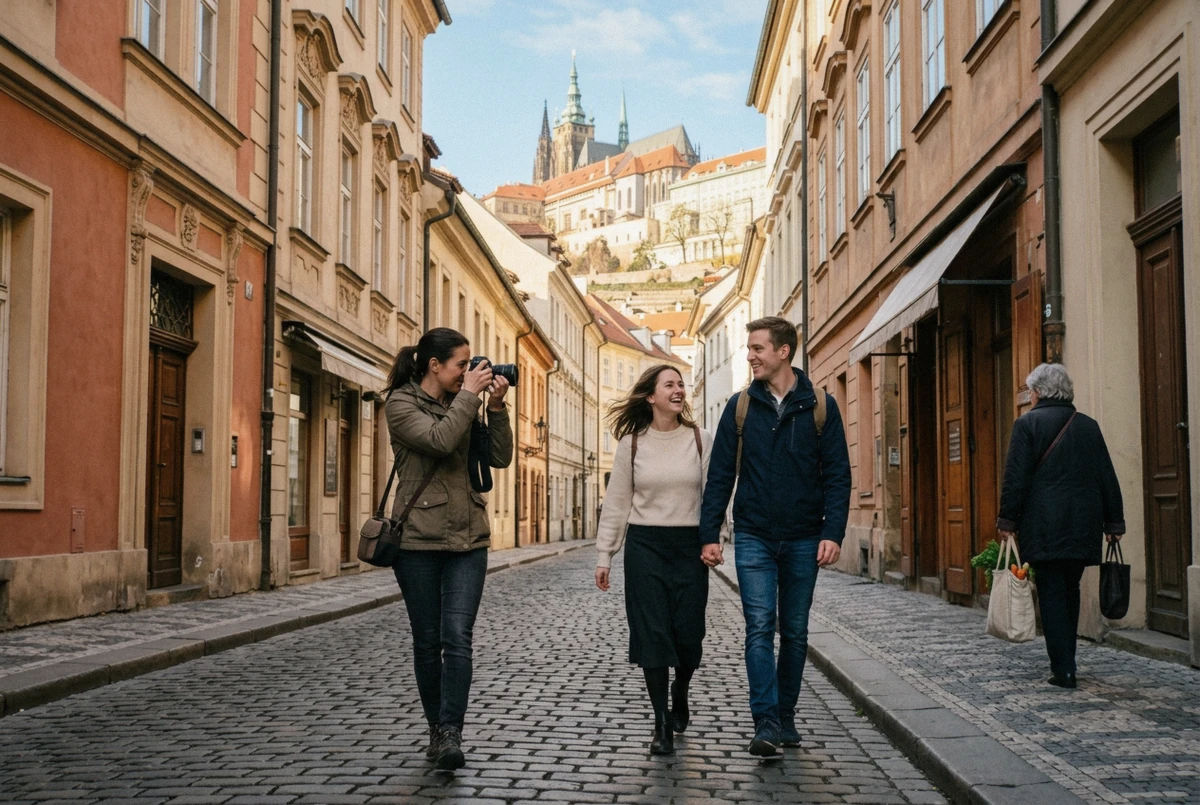
Walking through Prague photographing yourselves, with or without a hired photographer, needs no permit as long as nobody is setting up equipment. Permission enters the picture when a tripod goes up in a busy public space, when lighting appears, or when a staged group blocks a thoroughfare in the protected historic centre. Professional shoots inside the Prague Castle grounds need a paid permit from the Castle Administration, and drones over central Prague are effectively banned.
Key takeaways
- Every session on this comparison of Prague photoshoot listings is a hand-held walking shoot, which is why none of them needs paperwork
- The Czech Civil Code protects a person's likeness: photographing identifiable strangers and publishing those images normally needs their consent
- The Castle grounds are their own jurisdiction, which is why the Castle session works the courtyards as any visitor may
- Restricted airspace covers central Prague, roughly two kilometres around Charles Bridge and the Castle
Where the Line Sits
The same street, the same camera, four different situations. This is the practical version of the rule as Prague photographers describe it.
| What you are doing | What it counts as | What you need |
|---|---|---|
| Phone or camera, walking, personal photographs | Ordinary visitor behaviour | Nothing |
| A hired photographer walking with you, hand-held | A personal photoshoot | Nothing on public streets |
| Tripod at dawn on an empty street or viewpoint | Tolerated in practice | Nothing, but judgement: no blocking, no busy hours |
| Tripod or lighting in a busy square or on Charles Bridge | Commercial or organised production | Permission from the city and heritage authorities, with location fees |
| Staged bridal party, styled shoot with assistants | Commercial production in a protected area | Permission arranged in advance |
| Any professional shoot inside the Castle grounds | Castle jurisdiction | Paid permit from the Prague Castle Administration |
| Drone over the historic centre | Restricted airspace | Authorisation that is rarely granted |
| Photographing identifiable strangers for publication | Personal likeness under the Civil Code | Their consent, with narrow exceptions |
Read down that table and the pattern is clear: the trigger is equipment and staging, not whether money changed hands. A paid photographer with a camera in their hands is treated like a visitor. An unpaid enthusiast with a tripod, a light stand and a wedding dress in the middle of Old Town Square is not.
Rules by Venue
The same city, different regimes. Verified August 2026.
| Where | Personal photos | Organised shoot | Notes |
|---|---|---|---|
| Public streets and squares | Free | Permission once gear or staging appears | Obstruction is the practical test |
| Charles Bridge | Free, any hour | City permission for commercial work, substantial fees | Busiest thoroughfare in the country from mid-morning |
| Prague Castle courtyards | Free as a visitor | Paid permit from the Castle Administration | Skip noon for the ceremonial guard change |
| Castle ticketed interiors | Per building conditions | Not covered by outdoor sessions | Buy the Castle ticket separately |
| Royal, Vrtba and Wallenstein gardens | Free or with entry | Ask the garden administration | Seasonal opening; the Royal Garden runs 28 February to 31 October |
| Airspace over the centre | Not applicable | Rarely authorised | Restricted zone about 2 km around the bridge and Castle |
The Castle line is the one people trip over most, because the grounds feel like public streets and are administered as something else. Everything the outdoor sessions do there, including the Castle session, stays firmly on the visitor side of it.
Photographing People: What Czech Law Actually Says
The likeness rule
The Czech Civil Code protects a person's likeness as a personal right. In plain terms, capturing and then distributing an image in which a specific person can be identified normally requires that person's consent, and the protection covers photographs, film and any other form of depiction. Consent does not have to be written, and in practice a nod to a raised camera is how street portraits get made.
There are narrow statutory exceptions for news, artistic and scientific purposes, but they come with a condition: the use must not conflict with the legitimate interests of the person depicted. That is a real limit rather than a loophole, and it is why photographers who sell street portraits of strangers in Prague ask first.
What this means during your own session
For a booked photoshoot, essentially nothing changes. You are the subject and you have consented by booking. Strangers who wander through the background of a wide frame are incidental rather than the subject, which is a different situation from photographing an individual passer-by and publishing it.
Where it becomes your problem is social media. If you post a frame in which a stranger is the recognisable focus, you are the one distributing it. The practical rule most photographers use is simple: if a person is the point of the photograph rather than part of the scene, ask before you publish.
Children, performers and buskers
Buskers on Charles Bridge and performers in Old Town Square are working, not posing for you. A photograph taken as part of a wide street scene is normal; a close portrait taken without a word, then published, is not, and most performers will simply ask for a coin if you engage with them. Photographing other people's children without their parents' agreement is the fastest way to a confrontation in any European city, Prague included.
When a Shoot Becomes a Production
The three triggers
Prague photographers who handle weddings and commercial work describe the threshold consistently. A tripod going up in a busy public space, lighting equipment coming out, or a staged group posing in the UNESCO-protected historic centre: any of these turns a personal shoot into an organised production, which falls under city and heritage jurisdiction and attracts location fees.
Charles Bridge is the strictest ground of all, because it is both a monument and a thoroughfare under the city's own management. Commercial filming there is handled as a formal permission with substantial fees, and lead times run to weeks rather than days.
What that means for a wedding or elopement
If you are planning wedding photographs in the centre rather than travel portraits, this is a permission conversation and it belongs with your photographer months ahead, not with a booking platform. Every session listed on this site is a personal walking shoot, and the operators price and structure them accordingly.
The distinction is not about clothing. A couple in ordinary clothes walking with a photographer is a personal shoot; the same couple with a dress, a veil, a bouquet and an assistant holding a reflector is what the rule is aimed at.
Tripods, honestly
A tripod at first light on the Letna terrace, on Manesuv most or on an empty stretch of the riverbank is normal behaviour and nobody will trouble you. The same tripod on the Charles Bridge deck at eleven in the morning obstructs a public route, and that is the version that draws attention.
The practical rule is about obstruction rather than legality: if somebody has to walk around your equipment, you are in the wrong place at the wrong hour.
Prague Castle: Its Own Set of Rules
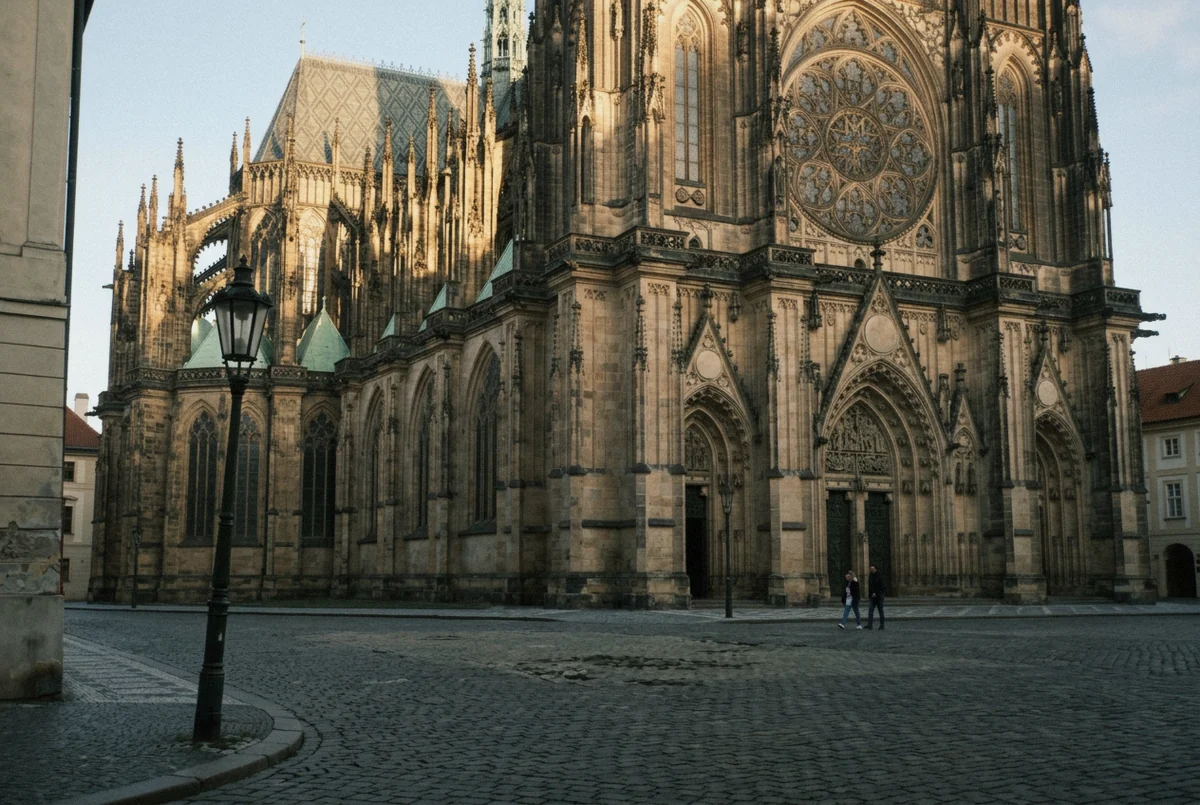
The Castle complex is administered separately from the city, and professional photography inside its grounds requires a paid permit from the Prague Castle Administration, which sets its own fee schedule. That applies to organised shoots, not to a visitor with a camera walking the courtyards, which is why the Castle session on this site works the forecourts, Hradcany Square and the terraces exactly as any visitor may.
The ticketed interiors are a further layer again. St Vitus Cathedral's nave, the Old Royal Palace, the Golden Lane and the basilica each have their own conditions, and none of the outdoor sessions here includes them. If interior photographs matter to you, buy the Castle ticket and treat it as a separate activity.
One timing note that is not a rule but behaves like one: the ceremonial changing of the guard fills the first courtyard at noon with a fanfare and a flag ceremony. Nothing forbids photography, but the courtyard is a wall of spectators for about a quarter of an hour, which is why every photographer working the hill books before ten or after four.
Drones Over Prague
This is the shortest section on the page because the answer is short. Central Prague sits inside restricted airspace. Flying within roughly two kilometres of Charles Bridge or Prague Castle is off-limits without authorisation, that authorisation is rarely granted for the historic core, and penalties for flying anyway are severe enough to end a holiday expensively.
There is no workaround worth attempting. The aerial views of Prague you have seen were either licensed productions with permission arranged months ahead, or they were taken from ground-level viewpoints that look aerial: the Letna terrace, the Petrin hill, the Castle terraces and the Old Town Bridge Tower gallery. Those four are what the viewpoints section of the photo spot guide is for.
If you are flying outside the city, check the current zones on the Czech drone map before you travel rather than assuming, since restricted areas change and the rules are enforced.
What Applies to You
If you are photographing yourselves on a trip
nothing on this page restricts you; walk, shoot and set nothing up
If you booked a private session
also nothing: every listing here is a hand-held walking shoot on public ground, and the comparison shows where each meets
If you are a hobbyist with a tripod
fine at dawn on a quiet street or viewpoint; move if anyone has to walk around the legs, and stay off the bridge deck at busy hours
If you are planning wedding or elopement photographs
that is a permission conversation with your photographer months ahead, not a booking-platform question
If you want aerial footage
there is no route in the historic core; use the Letna, Petrin or Castle terraces instead
Etiquette That Keeps a Shoot Friction-Free
- Do not block a public thoroughfare, especially the Charles Bridge deck at busy hours
- Treat Mala Strana and the Kampa lanes as residential, because they are
- Ask before making a stranger the subject of a photograph you intend to publish
- Keep out of doorways, shopfronts and cafe terraces without asking the owner
- Leave the peacocks in the Wallenstein Garden alone; they have right of way
- Follow the posted rules inside ticketed interiors, which vary building by building
- Do not climb monuments, statues or the bridge parapets for a better angle
None of this is enforced by anybody with a clipboard. It is enforced by the residents whose front door you are standing in, and Prague's centre has a genuinely tired relationship with tourism. A session that leaves nobody annoyed is also the one that gets the best frames, because photographers who are relaxed work better than photographers who are apologising.
Questions About Photography Rules in Prague
Do I need a permit for a photoshoot in Prague?
Not for a personal session with one photographer and a hand-held camera on public streets, which is what every bookable listing here is. Permission is needed when a tripod, lighting or a staged group appears in the protected historic centre, and a paid permit from the Castle Administration is needed for professional shoots inside the Prague Castle grounds.
Can you take street photography in Prague without asking permission?
You can take the photograph; distributing it is where the Civil Code applies. Czech law protects a person's likeness, so publishing an image in which a specific person is identifiable normally needs their consent, with narrow exceptions for news, art and science that must not conflict with that person's legitimate interests. In practice, ask when a person is the subject rather than part of a scene.
Can you fly a drone in Prague?
Effectively no. Restricted airspace covers the city centre, the zone extends roughly two kilometres around Charles Bridge and the Castle, and authorisation for the historic core is rarely granted. Use the ground-level viewpoints instead: Letna, Petrin, the Castle terraces and the bridge tower galleries all give you height without a licence.
Is a tripod allowed on Charles Bridge?
At dawn on an empty deck nobody will object; at eleven in the morning you are obstructing a public route and it will be treated as an organised setup. The safest reading is the practical one: if people have to walk around your gear, move or wait for a quieter hour.
Are there photography restrictions inside Prague Castle?
Yes, on two levels. Professional shoots inside the grounds need a paid permit from the Castle Administration, and the ticketed interiors set their own conditions building by building. Walking the courtyards with a camera as a visitor is ordinary and unrestricted, which is how the outdoor sessions here operate.
What happens if I ignore the rules?
For an obstructing tripod, usually a request to move. For an unpermitted commercial production in the protected centre, the consequences fall on the production, which is why professionals arrange permission in advance. For a drone over the historic core, the penalties are large enough that nobody who has read the rules attempts it.
For nearly every visitor the summary is one sentence: walk, shoot, and set nothing up. That covers phone photography, a personal camera, and every bookable session in the Prague photoshoot comparison, none of which carries equipment. The rules exist for the productions that block streets and monetise a protected city centre, and the further you stay from that description, the less of this page applies to you.